
Monsters Get Back. Way Back
Gladys has arrived.
I have seen monsters possess human bodies. I have seen them suffocate the dreams and smudge out the virtues of innocent children. I have watched them strangle the hopes of parents with invisible hands — watched them opportunistically use rationality to amplify cynicism into nihilism, manipulate cognition to make inaction feel like movement, shrink imagination into submission, and make human creativity look like a futile and misguided response to sanctioned terror.
This is not a civic failure alone, though its assessment and impact are both public and common. It is not a personnel failure alone — too many people have encountered them. This is a failure of literacy. A failure of education. And because monsters are an education failure, they demand an educated response.
My first name is Caroline. I am the third woman to carry that name on my father’s side. My grandmother and grandfather only finished elementary school because the state of Virginia did not invest in the education of Black people. But my granddaddy got his high school diploma at 55 — because literacy defangs the ignorance that sharpens oppression, and he knew it was never too late to take that weapon back. I am a teacher by calling, an engineer by training, and a writer by choice. My domain is equity-centered leadership — the creative discipline that builds the capacity to redesign relationships and render oppression obsolete.
Monsters live in oppression.
With more than twenty years of teaching children, adults, and teams across America, I have found that defanging oppression requires a battery of literacies — people must have the time, space, and community to interrogate the old ways of the past, observe their emergence in the present, and determine a more creative, novel response. But many adults with great potential for impact are too committed to the traditions of the past, or too consumed by the urgency of the present, to create a transformative future. In that fertile ground of inaction, I play, teach, and lead.
As a practitioner, I’ve observed that because systems of oppression have been designed, they can be redesigned — and we are the designers. This design challenge demands a canvas that is personalized, because our stories are different. It demands creativity on demand, because insight divinely disrespects time. And it demands a framework, because coherence requires structure. The first question: How do we create the conditions for people to co-author their own liberation? We answered it by co-building equityXdesign — a framework for liberatory design practices — as our educated response.
My first name is Caroline. My middle name is Inez. I carry the middle name of my maternal grandmother, Gladys. Her world was governed by segregation and the Racial Integrity Acts in Virginia. Her daughter Annase — my mother — was the first woman in their entire lineage to pursue higher education, not because there was no impulse or instinct. The state did not build the infrastructure. I am a teacher by calling, an engineer by training, and a writer by choice. I studied engineering as an undergraduate and learned to respect mathematics as the language of the natural world — and to understand the ethical cost of extending, accelerating, and automating human hands, feet, sight, and hearing. When it comes to defanging monsters, careful and thoughtful use of technology to extend the brain’s creative capacity must respect the relationship between humans and their environment, between human beings, and between humans and their future selves.
Especially now — when equity work, branded DEI, is cast as anti-American and laden with shame. The work most needed for our collective evolution is experienced as painful and uncomfortable for the powerful. We have to build this literacy and make it worth returning to. We need to make equity work irresistible. The second question: How might we use technology to extend human capabilities and scale equity in schools and communities — in a way that respects what is essentially human — and make that experience irresistible?
We built GLADYS.
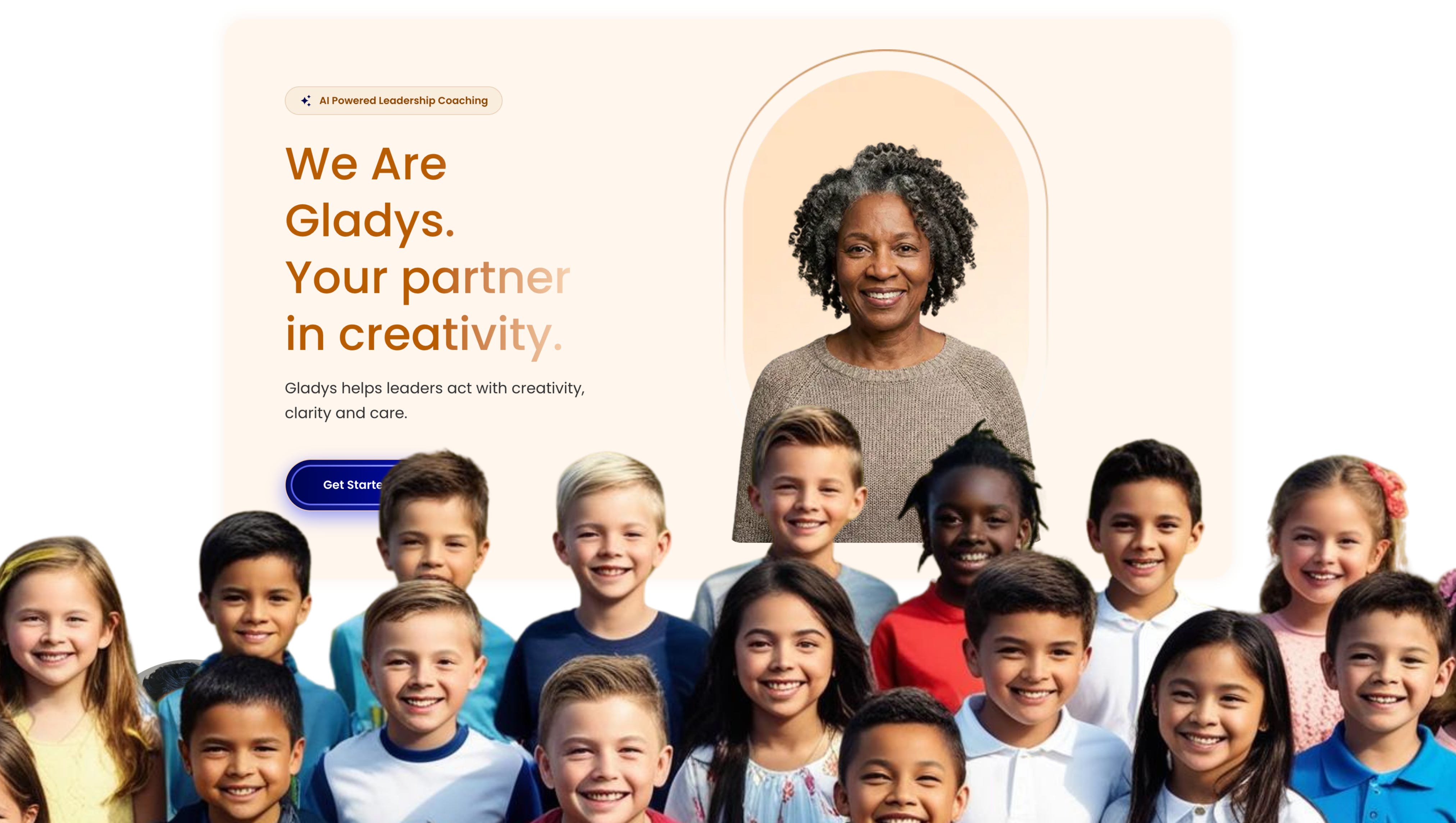
GLADYS is an AI-powered equity leadership coach — a school leader’s partner in creativity, grounded in equityXdesign and built on Fugitive Data Architecture principles that keep educator data sovereign and protected. GLADYS does not replace the human. She extends it — toward justice. She meets leaders in the exact tension between who they are and who their students need them to be. Built by and for those most excluded from the rooms where these technologies are designed, GLADYS is currently entering her founding cohort, partnering with equity leaders across the country to scale what accountability alone never could. You can find her at www.wearegladys.com.
My first name is Caroline. My middle name is Inez. My last name is Hill. I am a teacher by calling, an engineer by training, and a writer by choice. I write for those denied the opportunity to learn to communicate with the written word — to understand it, and use it to build a world without boundaries or margins. I write for my younger self, whose heart came more alive finding Audre Lorde, bell hooks, and Pat Parker — writers who taught me how to stand in the tradition of the Black woman who refuses a world that releases monsters too readily. I write to say I was here. I matter. And I hope to inspire others to know their ideas matter too.
My deepest question remains: How do I write so that engineers see themselves in the teacher, and teachers see themselves in the engineer, and each of them sees their own mark on the human story? How might I write to bring difference together without division?
This writer, teacher, and engineer co-built an AI-powered learning experience with educators — especially the most marginalized and excluded. This where that question finds its sharpest edge — a community of practitioners committed to technology that heals rather than extracts, restores rather than surveils, and builds power rather than consolidates it. That is the work. That is why I am here.
Monsters get back. Get way back.